Ontario Standard Lease (Form 2229E): a landlord's guide
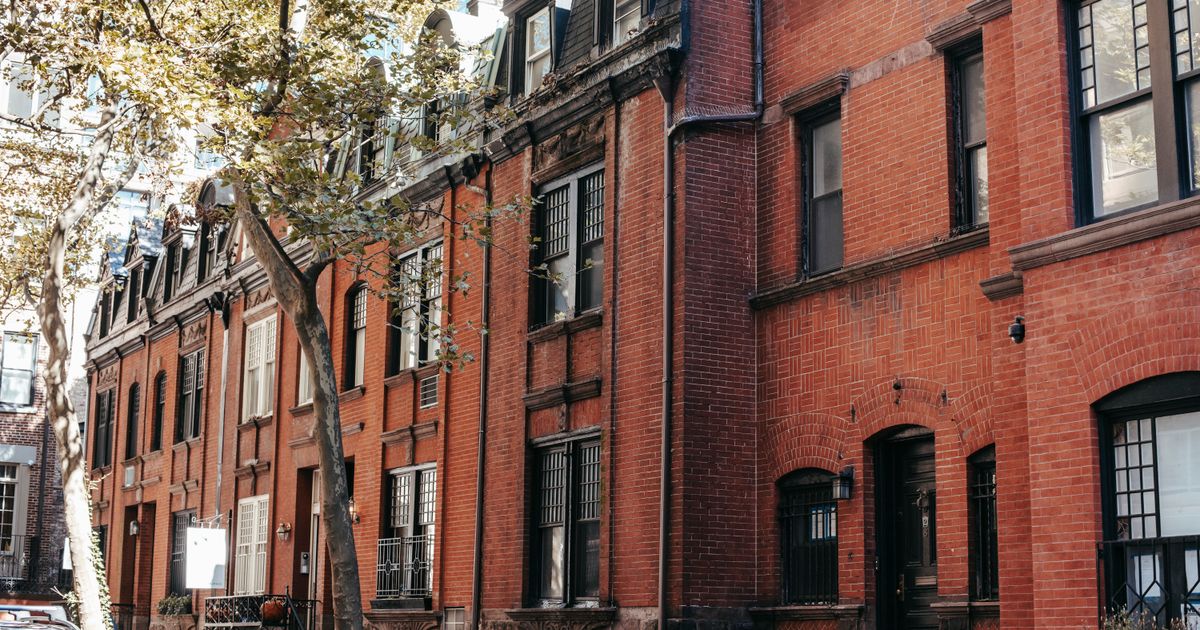
Photo by Charles Parker on Pexels
Since April 30, 2018, almost every new residential tenancy in Ontario must use the government-prescribed Standard Form of Lease — Form 2229E. It isn't a template you can swap for your own document; it's a mandatory form whose pre-printed sections can't be altered. If you manage even one Ontario rental unit, understanding this form is not optional.
When the standard lease applies
Form 2229E applies to most private residential tenancies governed by the Residential Tenancies Act (RTA). This includes apartments, houses, condominiums, and basement units. It does not apply to social housing, most student residences, or certain transitional housing. When in doubt, check the Ministry of Municipal Affairs and Housing guidance or consult a paralegal.
What the form covers — and what you can't change
The form has mandatory sections covering parties, the property address, term, rent, deposit, and the landlord's maintenance obligations. You cannot modify the pre-printed text. Doing so may invalidate the change or create grounds for a dispute at the Landlord and Tenant Board (LTB).
- Section 2 — Rental unit address and legal description of the property.
- Section 4 — Term: fixed-term or monthly. Fixed terms automatically convert to month-to-month at the end; they don't terminate automatically.
- Section 5 — Rent, including the base rent and any lawful charges for parking, lockers, or services.
- Section 8 — Smoking and other rules, captured in optional additional terms (Section 15).
- Section 11 — Tenant's rights and landlord's obligations under the RTA, which are mandatory regardless of what you write elsewhere.
The deposit rule: last month's rent only
Ontario is strict about deposits. The only deposit you can collect is a last month's rent (LMR) deposit — equal to one month's or one week's rent, depending on the payment frequency. Security deposits, pet deposits, and damage deposits are all illegal under the RTA. The LMR deposit can only be applied to the final period of the tenancy; it cannot be used to cover damage.
You must also pay the tenant annual interest on the LMR deposit at the provincial rent increase guideline rate — 2.1% for 2026, per the Ontario government. If you don't pay it, the tenant can legally deduct the owed interest from their next rent payment without filing at the LTB.
Addenda: how to add rules without violating the RTA
Section 15 allows you to add additional terms in writing. This is where lease-specific rules live — rules about pets, parking, storage lockers, appliance use, or move-out cleaning expectations. Any additional term is only enforceable if it does not waive or reduce a right the RTA already gives the tenant. A clause that says 'the tenant cannot request repairs' is void. A clause that says 'the tenant must give 48 hours' notice before a scheduled showing' is likely enforceable. When unsure, a paralegal review is worth the cost.
The consequence of not providing the lease
If a tenant asks for the signed Standard Lease in writing and you don't provide it within 21 days, they are legally entitled to withhold one month's rent. If you still haven't provided it within 30 days after that, they can keep the withheld rent permanently. This is a specific statutory remedy — not a general right to withhold — but it is real and it applies.
Practical steps for every new tenancy
- Download the current Form 2229E from the Ontario Central Forms Repository (forms.mgcs.gov.on.ca) and use that version, not a cached copy from years past.
- Complete every mandatory section. Blank fields can be disputed.
- Draft any addenda in writing and attach them as Schedule A. Give a copy to the tenant before they sign.
- Sign two copies and give the tenant theirs within 21 days of their signing.
- Document the delivery — email with acknowledgment, or hand-delivery with a note.
- Lease management in Kera
- Tenant screening
- More leasing guides
- Tenant screening in Canada: fair and consistent
Does the Ontario Standard Lease apply to month-to-month tenancies?
Yes. The form is required for new tenancies regardless of whether you start with a fixed term or a monthly arrangement. Once a fixed-term lease ends, it converts to monthly automatically — no new lease is required at that point.
Can I still use my own lease document in Ontario?
Not for covered residential tenancies. You must use Form 2229E as the base. You can attach additional terms as a schedule, but you cannot replace or alter the mandatory pre-printed sections.
What happens if a tenant damages the unit — can I use the last month's rent deposit to cover it?
No. The LMR deposit can only be applied to the final period of rent. Damage claims must be pursued separately through the LTB using the appropriate application.
How often must I update the interest on the last month's rent deposit?
Once per year. The interest rate equals the provincial rent increase guideline for that year (2.1% in 2026). You can pay it out or credit it against rent owed.
Is a digital/e-signed version of the Standard Lease valid?
General guidance supports electronic signing for contracts, but you should confirm the specific method is acceptable to both parties and that you retain a clear record of consent and execution. A platform that produces a signed PDF with a timestamped audit trail is a reasonable approach.
Get your leases signed and stored in one place
Kera generates Ontario-compliant leases, collects e-signatures, and keeps every signed document in the tenant's file — no paperwork, no lost copies.
Run your whole business on Kera
Flat pricing, no per-door fees. Built for property managers.